International Journal of Clinical Endocrinology and Metabolism
The Importance of Risk Stratification and Management of Newborn Babies of Women with a History of Graves’ disease
1Department of Women’s and Children’s Health, Institute of Translational Medicine, University of Liverpool, Crown Street L8 7SS, Liverpool, UK
2Department of Paediatrics, Southport and Ormskirk NHS Trust, Wigan Road, Ormskirk, L39 2AZ, UK
Author and article information
Cite this as
Ng SM, Turner MA (2016) The Importance of Risk Stratification and Management of Newborn Babies of Women with a History of Graves’ disease. Int J Clin Endocrinol Metab. 2016; 2(1): 1-4. Available from: 10.17352/ijcem.000012
Copyright License
© 2016 Ng SM, et al. This is an open-access article distributed under the terms of the Creative Commons Attribution License, which permits unrestricted use, distribution, and reproduction in any medium, provided the original author and source are credited.Thyroid hormones are essential for normal brain development, growth and energy metabolism. During early pregnancy, the foetus is entirely dependent on maternal thyroid hormones and in the second and third trimesters, maternal thyroid hormones continue to provide sufficient thyroid hormones until birth. Maternal thyroid disease is common during pregnancy with hyperthyroidism during pregnancy occurring in 1% and autoimmune thyroiditis in 7% of pregnant women. Neonatal thyrotoxicosis may results from antibodies crossing from the mother to foetus and can result in serious adverse effects on the foetus.
Management of thyrotoxicosis or hyperthyroidism during pregnancy is important because of the increased risk of miscarriage and preterm delivery and the potential damage to foetal neurodevelopment. It is therefore important to identify ‘at risk’ babies soon after birth according to the maternal history so that evaluation of maternal and neonatal thyroid status can be undertaken in a timely way. To date, there are no consensus guidelines as to how these babies should be managed and followed up within the United Kingdom. This may result in babies of women with a history of hyperthyroidism or Graves’ having unnecessary blood tests and prolonged hospital stay after birth. A population-based survey in Sweden and a single-centre audit in Exeter, has shown that in fact very few babies with a maternal history of hyperthyroidism or Graves’ disease develop thyroid disease and that too many thyroid function tests are unnecessarily being performed in newborn babies. This review aims to describe an approach to risk stratification and subsequent management of babies born to mothers with a history Graves’ disease.
Thyroid hormones are essential for normal brain development, growth and energy metabolism [1]. During early pregnancy, the foetus is entirely dependent on maternal thyroid hormones and in the second and third trimesters, maternal thyroid hormones continue to provide sufficient thyroid hormones until birth [2,3]. Maternal thyroid disease is common during pregnancy with hyperthyroidism during pregnancy occurring in 1% and autoimmune thyroiditis in 7% of pregnant women [4]. Neonatal thyrotoxicosis may results from antibodies crossing from the mother to foetus and can result in serious adverse effects on the foetus [5].
Management of thyrotoxicosis or hyperthyroidism during pregnancy is important because of the increased risk of miscarriage and preterm delivery and the potential damage to foetal neurodevelopment [4]. It is therefore important to identify ‘at risk’ babies soon after birth according to the maternal history so that evaluation of maternal and neonatal thyroid status can be undertaken in a timely way. To date, there are no consensus guidelines as to how these babies should be managed and followed up within the United Kingdom. This may result in babies of women with a history of hyperthyroidism or Graves’ having unnecessary blood tests and prolonged hospital stay after birth [6]. A population-based survey in Sweden [7] and a single-centre audit in Exeter [8], has shown that in fact very few babies with a maternal history of hyperthyroidism or Graves’ disease develop thyroid disease and that too many thyroid function tests are unnecessarily being performed in newborn babies [6]. This review aims to describe an approach to risk stratification and subsequent management of babies born to mothers with a history Graves’ disease.
Babies of women with a history of Graves’ disease
Maternal Graves’ disease can lead to transplacental transfer of antibodies that cause neonatal thyrotoxicosis. Neonatal thyrotoxicosis has significant risk of morbidity and mortality. The incidence of Graves’ disease is 0.2% in pregnancy and neonatal thyrotoxicosis can occur in approximately 1% of babies born to women with Graves’ disease [9,10]. However, congenital thyrotoxicosis is rare occurring in one in 70 of these pregnancies independent of maternal Graves’ disease status. The risk of neonatal thyrotoxicosis can be assessed through a measurement of thyroid receptor antibodies (TRAb) [9] and assessment of maternal history [11]. Babies of mothers with Graves’ disease may experience hypothyroidism or hyperthyroidism due to transplacental transfer of antithyroid drugs or thyroid stimulating antibodies or thyroid receptor antibodies (TRAb) [11]. The current UK screening programme does not detect neonatal thyrotoxicosis as it screens only for high thyroid-stimulating hormone (TSH) levels in congenital hypothyroidism. Neonatal thyrotoxicosis can also rarely occur in mothers with Hashimoto’s thyroiditis due to activating mutations of the TSH receptor [12]. The most important clue to the diagnosis of neonatal thyrotoxicosis lies in the maternal history and clinical findings.
Risk assessment of babies whose mother has a history of hyperthyroidism or Graves’’ disease
Identifying ‘at risk’ babies is important by maternal history and levels of TRAb in the mothers during the pregnancy [11,12]. Mothers with Graves’ disease who are euthyroid due to anti-thyroid medication or hypothyroid due to thyroidectomy or radioiodine therapy can still have high levels of TRAb which can cause result in neonatal thyrotoxicosis [14]. In a recent study [11], none of the babies born to TRAb- negative mothers with Graves’ disease developed neonatal thyrotoxicosis. Babies should therefore be assessed as having either low risk or high risk (Table 1).
In babies who are at low risk, no other action is required. Babies do not need further follow-up of this issue and parents are advised to seek medical advice if there are any concerns. Babies who have moderate to high risk should be reviewed between day 3–7 following birth for signs and symptoms of thyroid disease with a repeat free thyroxine (FT4) measurement taken [11]. Rapid FT4 elevation during the first postnatal week is predictive of hyperthyroidism and warrants anti-thyroid medications [11].
Thyrotoxic babies usually develop signs and symptoms from birth to 2 weeks of life. Signs and symptoms of thyrotoxicosis include goitre, tachycardia, arrhythmia, hydrops associated with heart failure, intrauterine growth retardation, subsequent inadequate weight gain, craniosynostosis, increased foetal motility/ jitteriness, increased sweating, hypertension, diarrhoea, vomiting, weight loss, periorbital oedema, exophthalmos, bruising/ petechiae due to thrombocytopenia and accelerated bone maturation.
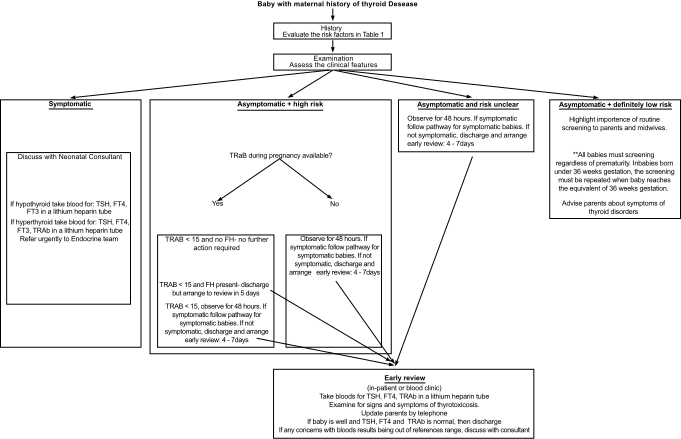
In asymptomatic babies born to mothers with a history of thyrotoxicosis or Graves’ disease who are “at risk”, maternal TRAB measurements from this pregnancy should be available for assessment. This requires an integrated care pathway involving maternity service and adult endocrine specialists that reliably obtains TRAB measurements during the third trimester of the current pregnancy. Management is advised accordingly [13]:
• If TRAb < 15 U/L and there is no family history of Graves’ noted, then no further action is required and baby can be discharged from follow-up for this problem.
• If TRAb U/L < 15 U/L and there is a family history present, baby does not need to be an in-patient following delivery. Observation, examination and history for signs or symptoms of thyrotoxicosis needs to be reviewed by an experienced member of the neonatal or midwifery staff between days 5-7 following birth. Baby’s thyroid function (TSH, FT4) and TRAb levels should also be obtained at day 5-7. If baby is well and TSH, FT4 and TRAb is normal, then baby can be discharged.
• If TRAb U/L >15 U/L, observe baby as an inpatient for 48 hours and arrange to review baby again between day 5-7. Baby’s thyroid function (TSH, FT4) and TRAb levels should be obtained. If baby is well and TSH, FT4 and TRAb is normal, then baby can be discharged.
Parents must always be informed of signs and symptoms of thyrotoxicosis at any time during first 2 weeks of life and advised to seek medical advice at any time if there are concerns. Pathway for infants with a maternal history of Graves’ disease is shown in Figure 1.
Neonatal thyrotoxicosis is rare and a high index of suspicion is needed to diagnose it. Symptomatic, thyrotoxic babies can be treated with antithyroid or thionamide drugs such as proplythiouracil (PTU) or carbimazole, beta-adrenergic receptor blocking agents, iodine, or iodinated contrast agents. However, the American Thyroid Association (ATA) had recommended that PTU should not be prescribed as the first line agent in children and adolescents due to the higher risk of potential side effects [15]. A clinical suspicion of neonatal thyrotoxicosis warrants an urgent TSH, FT4, TRAb measurement and discussion with the neonatal consultant with collaboration with the pediatric endocrinologist as the treatment can be difficult and there is a high incidence of morbidity and mortality.
Babies who are thyrotoxic are treated with 0.25–1.5 mg kg/day Carbimazole in three divided doses. Agranulocytosis occurs in 0.03% from Carbimazole therapy. Full blood count should be measured 1 week after treatment or if there were any concerns at any time. Thionamide drugs block thyroid hormone synthesis but not the release of thyroid hormones, therefore a clinical response may not occur until the thyroid hormone stored in the colloid is depleted. Iodine solution which suppresses thyroid hormone synthesis and has a prompt effect in inhibiting the release of thyroid hormones may be used in conjunction with thionamides during the first week such as Lugol’s Iodine solution 0.05ml 3 times a day for one week. Beta-blockers are also effective in controlling thyrotoxic symptoms caused by adrenergic stimulation. Propranolol may be used in a dose of 0.25–0.75 mg/kg 8 hourly until symptoms improve. In severe thyrotoxicosis, prednisolone 2mg/kg/day may be used to suppress deiodination of T4 to T3 and compensates for hypercatabolism of endogenous glucocorticoids induced by T3 and T4 [9].
Babies on treatment must be monitored clinically and serial measurements taken for TSH and FT4 to achieve normal FT4 levels. TSH may remain suppressed for 3 to 4 weeks even with adequate therapy. During treatment of neonatal hyperthyroidism, TRAb values less than 20 U/L may be helpful in deciding when to withdraw antithyroid medication [13]. Neonatal Graves’ disease tends to resolve spontaneously within 8-20 weeks as maternal TRAbs are cleared from the circulation but subsequent development may be impaired by perceptual motor difficulties [9]. Almost all neonates were euthyroid by 48 weeks postnatal age due to survival time of circulating TRAb antbodies in a cohort study of neonatal thyrotoxicosis [16]. Once antithyroid medication is stopped, there is no need for further follow up.
Key Principales
1. Babies born to mothers with history of thyrotoxicosis or Graves’ disease need to be stratified as low or high risk babies for appropriate management after birth.
2. Babies at moderate to high risk of neonatal thyrotoxicosis need to be evaluated about a week after birth.
3. If the evaluation a week after birth is reassuring, babies do not need further follow-up for thyroid issues.
4. Babies on treatment must be monitored clinically and serial measurements taken for TSH and FT4 to achieve normal FT4 levels.
- Ng SM, Turner MA, Gamble C, Didi M, Victor S, et al. (2013) An explanatory randomized placebo controlled trial of levothyroxine supplementation for babies born <28 weeks' gestation: results of the TIPIT trial. Trials 14: 211 .
- Morreale de Escobar G, Obregon MJ, Escobar del Rey F (2000) Is neuropsychological development related to maternal hypothyroidism or to maternal hypothyroxinemia? J Clin Endocrinol Metab 85: 3975-3987 .
- Bernal J, Pekonen F (1984) Ontogenesis of the nuclear 3,5,3'-triiodothyronine receptor in the human fetal brain. Endocrinology 114: 677-679 .
- Abalovich M, Amino N, Barbour LA, Cobin RH, De Groot LJ, et al. (2007) Management of thyroid dysfunction during pregnancy and postpartum: an Endocrine Society Clinical Practice Guideline. J Clin Endocrinol Metab 92: S1-47 .
- Medici M, Timmermans S, Visser W, de Muinck Keizer-Schrama SM, Jaddoe VW, et al. (2013) Maternal thyroid hormone parameters during early pregnancy and birth weight: the Generation R Study. J Clin Endocrinol Metab 98: 59-66 .
- Ogundele MO, Waterson M (2010) When should we be conducting thyroid function tests in newborns and young infants? Arch Dis Child 95: 151-152 .
- Wikner BN, Sparre LS, Stiller CO, Kallen B, Asker C (2008) Maternal use of thyroid hormones in pregnancy and neonatal outcome. Acta Obstet Gynecol Scand 87: 617-627 .
- Ogundele MO, Quinn MW, Salzmann M (2008) Investigation of infants born to mothers with thyroid disorders: a search for consensus. European Academy of Paediatrics .
- Ogilvy-Stuart AL (2002) Neonatal thyroid disorders. Arch Dis Child Fetal Neonatal Ed 87: F165-171.
- Luton D, Le Gac I, Vuillard E, Castanet M, Guibourdenche J, et al. (2005) Management of Graves’' disease during pregnancy: the key role of fetal thyroid gland monitoring. J Clin Endocrinol Metab 90: 6093-6098 .
- Besancon A, Beltrand J, Le Gac I, Luton D, Polak M (2014) Management of Neonates born to Women with Graves’' Disease: A Cohort Study. Eur J Endocrinol 170: 855-862 .
- Habeb AM, Zubier M, Pairaudeau P, Mathew V (2003) Do we need to assess the thyroid function in the infants of mothers with Hashimoto's thyroiditis? Arch Dis Child Fetal Neonatal Ed 88: F258 .
- Skuza KA, Sills IN, Stene M, Rapaport R (1996) Prediction of neonatal hyperthyroidism in infants born to mothers with Graves’ disease. J Pediatr 128: 264-268 .
- Laurberg P, Bournaud C, Karmisholt J, Orgiazzi J (2009) Management of Graves’' hyperthyroidism in pregnancy: focus on both maternal and foetal thyroid function, and caution against surgical thyroidectomy in pregnancy. European journal of endocrinology / European Federation of Endocrine Societies 160: 1-8 .
- Karras S, Tzotzas T, Kaltsas T, Krassas GE (2010) Pharmacological treatment of hyperthyroidism during lactation: review of the literature and novel data. Pediatric endocrinology reviews. PER 8: 25-33 .
- Sunshine P, Kusumoto H, Kriss JP (1965) Survival time of circulating long-acting thyroid stimulator in neonatal thyrotoxicosis: implications for diagnosis and therapy of the disorder. Pediatrics 36: 869-876 .

 Save to Mendeley
Article Alerts
Subscribe to our articles alerts and stay tuned.
 This work is licensed under a Creative Commons Attribution 4.0 International License.