Global Journal of Obesity, Diabetes and Metabolic Syndrome
The Interaction between Metabolic Disease and Ageing
1Aston Research Centre for Healthy Ageing & School of Life and Health Sciences, Aston University, Birmingham, B4 7ET, UK
2Centro Andaluz de Biología del Desarrollo, Universidad Pablo de Olavide-CSIC, and CIBERER Instituto de Salud Carlos III, Sevilla 41023, Spain
Author and article information
Cite this as
Rana KS, Griffiths HR, Navas P, Brown JE (2014) The Interaction between Metabolic Disease and Ageing. Glob J Obes Diabetes Metab Syndr. 2014; 1(1): 7-11. Available from: 10.17352/2455-8583.000002
Copyright License
© 2014 Rana KS, et al. This is an open-access article distributed under the terms of the Creative Commons Attribution License, which permits unrestricted use, distribution, and reproduction in any medium, provided the original author and source are credited.Two of the greatest crises that civilisation faces in the 21st century are the predicted rapid increases in the ageing population and levels of metabolic disorders such as obesity and type 2 diabetes. A growing amount of evidence now supports the notion that energy balance is a key determinant not only in metabolism but also in the process of cellular ageing. Much of genetic evidence for a metabolic activity-driven ageing process has come from model organisms such as worms and flies where inactivation of the insulin receptor signalling cascade prolongs lifespan. At its most simplistic, this poses a conundrum for ageing in humans – can reduced insulin receptor signalling really promote lifespan and does this relate to insulin resistance seen in ageing? In higher animals, caloric restriction studies have confirmed a longer lifespan when daily calorie intake is reduced to 60% of normal energy requirement. This suggests that for humans, it is energy excess which is a likely driver of metabolic ageing. Interventions that interfere with the metabolic fate of nutrients offer a potentially important target for delaying biological ageing.
In the coming decades the UK faces a dual crisis of an ageing population and increasing levels of obesity and associated disorders, including diabetes. Demographic research has confirmed that the UK and European populations are increasingly skewed towards older adults [1], and that this trend is likely to continue in the future. Added to this, concomitant increases in obesity [2] and type 2 diabetes [3] represent significant social, medical and economic challenges in the future.
The process of ageing negatively affects many tissues in the human body, e.g. decreasing collagen elasticity and increasing collagen deposition in fibrosis, but ageing has a particularly significant impact on those tissues associated with nutrient metabolism such as the pancreas. It is well established that the incidence of the metabolic disorder type 2 diabetes, a disease that is characterised by elevated blood glucose levels, increases with age [4,5]. This may be due to the fact that as the human body ages, peripheral tissues become less sensitive to the actions of the hormone insulin, secreted from the pancreas in response to post-prandial increases in blood glucose [6]. The specific reasons for this age-related decrease in insulin sensitivity are not fully understood, and may reflect a failure to adapt to chronic metabolic stress. Diabetes itself is known to significantly decrease the chances of successful ageing, and notably increases the extent of functional impairment in vision, renal function and cognitive function [7].
Increasing evidence suggests that energy balance is central to both successful ageing and protection from metabolic disorders. The close links between these two phenomena are reviewed here.
Ageing and energy balance: restriction of nutrients
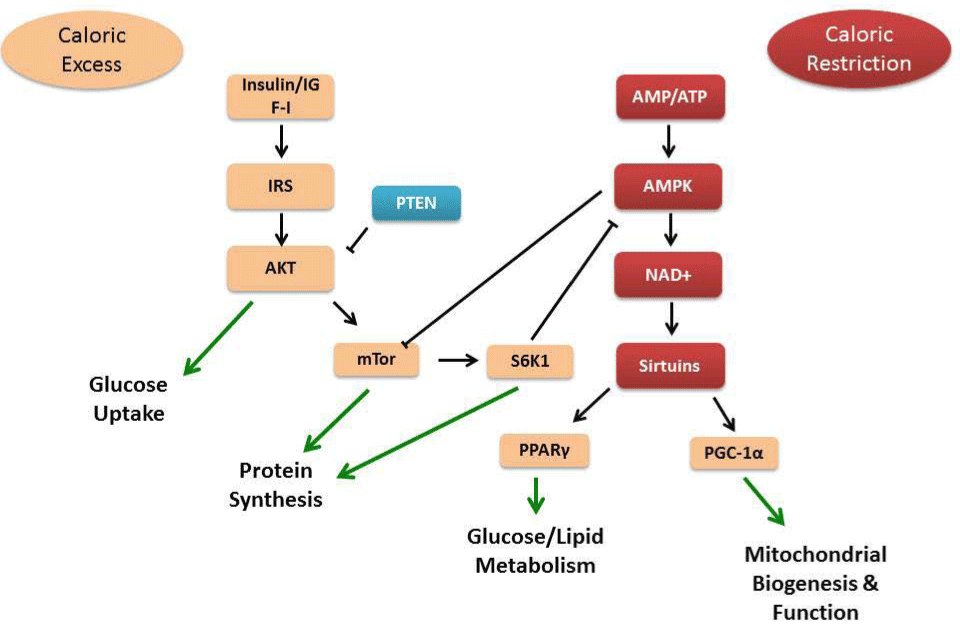
The recent proliferation of research into ageing and longevity across multiple cells/organisms has produced some fascinating candidate regulatory molecules and pathways. From extensive research using Caenorhabditis elegans and rodent models, we can now manipulate genes associated with several key signalling pathways that play significant roles in the ageing process. It is fascinating that a large proportion of these pathways are also involved in energy balance and metabolic disorders (an example of the complex interplay of these pathways is illustrated in Figure 1).
At one extreme of this relationship is the well-established field of caloric restriction (CR). It has been known for some 70 years now [8] that a link exists between CR and longevity. CR is currently the only dietary intervention that is proven to increase longevity and delay the onset of age-related decline [9] and has been demonstrated in a wide variety of organisms, including Caenorhabditis elegans [10,11], Saccharomyces cerevisiae [12,13], Drosophila melanogaster [14], rodents [15,16], but in primates CR appears to not affect longevity, but clearly delay age-associated disorders improving health [17-19,20].
Research into the mechanisms behind the CR-longevity link has repeatedly pointed to either hormetic or metabolic genes/proteins as being of key importance. The best characterised of these are the sirtuins (SIRT), mammalian homologues of the yeast NAD+-dependent deacetylase sir2 [21]. SIRT1, in particular has been shown to regulate CR induced increases in longevity in many organisms [22], although SIRT1 independent pathways have also been identified [23,24]. Upon closer inspection of the mechanism of action of CR-induced SIRT1 activity, the link between ageing and metabolism first becomes clear.
SIRT1 catalyses the de-acetylation of a number of targets associated with metabolism and energy homeostasis upon activation by CR, and this process leads to transcriptional regulation of several key metabolic factors such as protein tyrosine phosphatase 1B (PTP1B), a negative regulator of insulin signalling, IRS1 and liver X receptor (LXR). CR-induced activation of SIRT1 causes a de-acetylation of LXR which, alongside down-regulation of PTP1B, ultimately results in decreased insulin resistance [25]. To accompany this decrease in insulin resistance, SIRT1 activation also causes an increase in insulin secretion from pancreatic β-cells [26]. Therefore, while SIRT1 is essential for maintaining glucose sensitivity it shows decreased expression in aged versus young tissues. The SIRT1-dependent improvements in insulin homeostasis, coupled with increases in hepatic glucose output mediated by de-acetylation of the transcription co-activator peroxisome proliferator-activated receptor-γ (PPARγ) co-activator 1α (PGC1α) [27], which also induces a high efficient mitochondria biogenesis [28], indicate how pivotal energy balance and metabolism are to hormesis and longevity.
It is important to indicate that the rise of NAD+ concentration by NADH-dependent plasma membrane dehydrogenases, which are activated by CR [29-31], would be also key factors to activate sirtuins and thus longevity [32].
Ageing and energy balance: nutrient excess
The other extreme to CR is nutrient excess. Exposure to nutrient excess, frequently characterised experimentally as a ‘high-fat diet’, has also been shown to reduce longevity [33]. Resveratrol, which is considered a CR mimetic, prevents the obesity-associated diseases and extends obese animal lifespan [34,35]. The classical pathway activated by nutrients is the insulin/insulin-like growth factor-1 (IGF-1) and forkhead box protein (FOXO) pathway, opposing AKT and FOXO to modulate bioenergetics in response to nutrients availability. In metabolic terms, insulin receptor activation is central to glucose homeostasis as it allows cellular uptake of glucose from the circulation into peripheral tissues [36]. In nutrient excess, insulin resistance is often seen, forming the basis for the age-related increase in risk for metabolic disease and type 2 diabetes [37]. Insulin has a role in ageing too, as adipose tissue-specific insulin receptor knockout mice have been shown to extend longevity [38].
An increasing amount of data now suggests that the mammalian target of rapamycin (mTor) pathway is involved in linking nutrient exposure to insulin resistance and ageing. mTor forms two separate complexes (known as mTORC1 or mTORC2) that have distinct biological activities. mTORC1 is activated by nutrient excess [39] and drives biogenesis mediated by the mTORC1 effector, S6K1 [40]. Alongside this emerging role in nutrient sensing and metabolism, mTor has a well-defined role in cell growth and ageing [41-43]. Interestingly, S6K1 -/- mice exhibit similar gene expression profiles to those of calorie restricted mice, with females showing extended longevity and reduced age-related diseases [44]. Reduction of mTORC1 activity in genetic mouse models is also associated with a reduction in age-related cancers [44,45]. This provides further linkage between absence of an enzyme which regulates response to nutrient excess, and successful ageing.
Homologues of the insulin/IGF-1 receptor and its associated signalling molecules, including daf-2, age-1, daf-16 have been associated with changes in longevity in C elegans by a number of authors [46,47]. Similar genes have been identified in yeast, fruit flies and mice, confirming the central role of this pathway in the ageing process. Evidence suggests that these long-lived mutants, ranging from yeast to mice, share important characteristics, including decreased insulin signalling, increased insulin sensitivity [48], and reduced circulating IGF-1 levels [46,49]. These observations strongly suggest that the insulin/IGF-1 pathway might possibly be fundamental to the process of aging in lower and higher organisms, a theory which is borne out by repeated studies into the actions of FOXO family members [50-52].
Does brown adipose tissue hold the key to ageing and metabolism?
There is one particular tissue of mammalian bodies that might potentially provide a decisive and exploitable link between energy balance and ageing. Brown adipose tissue (BAT) has developed as an essential thermoregulatory effector, by facilitating the dissipation of stored energy through the production of heat during the challenge of low environmental temperatures [53]. The actions of BAT are essentially antagonistic to the other main from of adipose tissue, white adipose tissue (WAT) which is predominantly responsible for storing excess energy as triglycerides. The thermogenic ability of BAT is attributable to the high mitochondrial content mediating proton transfer across mitochondrial membranes to produce ATP, in the absence of ATP production excess energy stored in the protons is leaked via uncoupling protein 1 (UCP-1) and released as heat, inducing “non-shivering” thermogenesis [54]. Consequently BAT was until recently thought to be only found in small hibernating mammals and newborns, both of which have a large surface area to body mass ratio and are less capable of maintaining core body temperature [55]. Recent studies utilising both positron emission tomography (PET) and computed tomography (CT) have however identified significant reserves of BAT in adults, using radioactively labelled fluorodeoxyglucose (FDG) as a means of identifying this metabolically active tissue [56-58]. It has been recently discovered that these BAT deposits corresponds to beige adipocytes that are activated through the novel, exercise-induced myokine irisin [59,60]. Recent evidence from our group has demonstrated a significant positive association between plasma irisin levels and telomere length in healthy individuals, highlighting the potential role that modulation of adipose tissue biology has in healthy ageing [61].
These observations, that BAT is present and active in adult humans, represent a huge change in the accepted paradigm of adipose tissue and energy balance. Of potentially key importance is the observation that in mice WAT can be converted to BAT by regulating the expression of a key transcriptional regulator, PRDM16 [62]. This observation opens the door to potential future therapies aimed at recruiting BAT from existing WAT stores in humans, an avenue that would provide a major breakthrough in the treatment of obesity and type 2 diabetes.
In a breakthrough study, the beneficial effects of enhanced BAT and UCP1 activity on longevity was confirmed when a study conducted by Molina et al. reported that mice carrying additional copies of the tumour suppressor gene phosphatase and tensin homolog (Pten), have hyperactive BAT and high levels of UCP1 [63]. This increase in BAT levels was seen to be orchestrated by the PI3K/AKt/Foxo pathway and activation of UCP1 transcriptional promoter PPARγ coactivator 1α. This increase in energy expenditure protected the mice from onset of metabolic pathologies like obesity and diabetes, and was associated with a significantly prolonged life span. This fascinating study highlights not only the huge potential in targeting this signalling pathway as a future therapy for metabolic disorder and ageing, but also highlights how closely their underlying mechanisms are aligned. For one gene to have such a profound effect on two seemingly distinct biological phenomena suggests that they are actually not distinct but instead are likely to be integrated. In correcting the dysregulated energy balance associated with obesity, extended lifespan can be achieved.
Conclusion
Growing evidence supports the notion that energy balance is a key determinant in the process of cellular ageing. With the increasing prevalence of metabolic disorders such as obesity and diabetes, there is an urgent need to improve understanding of the association between metabolic disturbance and biological ageing in humans. Increasing energy expenditure rather than storage during ageing by inducing phenotype-switch in adipose tissue may offer a promising strategy.
- Lutz W, Sanderson W, Scherbov S (2008) The coming acceleration of global population ageing. Nature 451: 716-719.
- Wang YC, McPherson K, Marsh T, Gortmaker SL, Brown M (2011) Health and economic burden of the projected obesity trends in the USA and the UK. Lancet 378: 815-825.
- Bagust A, Hopkinson PK, Maslove L, Currie CJ (2002) The projected health care burden of Type 2 diabetes in the UK from 2000 to 2060. Diabetic medicine: a journal of the British Diabetic Association Suppl 4: 1-5.
- Cowie CC, Rust KF, Byrd-Holt DD, Eberhardt MS, Flegal KM, et al. (2006) Prevalence of diabetes and impaired fasting glucose in adults in the U.S. population: National Health And Nutrition Examination Survey 1999-2002. Diabetes care 29: 1263-1268.
- Rathmann W, Strassburger K, Heier M, Holle R, Thorand B, et al. (2009) Incidence of Type 2 diabetes in the elderly German population and the effect of clinical and lifestyle risk factors: KORA S4/F4 cohort study. Diabetic medicine: a journal of the British Diabetic Association 26: 1212-1219.
- Amati F, Dube JJ, Coen PM, Stefanovic-Racic M, Toledo FG, et al. (2009) Physical inactivity and obesity underlie the insulin resistance of aging. Diabetes care 32: 1547-1549.
- Viljoen A, Sinclair AJ (2011) Diabetes and Insulin Resistance in Older People. Med Clin N Am 95: 615-629.
- McKay CM CMaML (1935) The effect of retarded growth upon the length of life span and upon the ultimate body size. J Nutrition 10: 63-79.
- Masoro EJ (2005) Overview of caloric restriction and ageing. Mechanisms of ageing and development 126: 913-922.
- Lee CK, Klopp RG, Weindruch R, Prolla TA (1999) Gene expression profile of aging and its retardation by caloric restriction. Science 285: 1390-1393.
- Lakowski B, Hekimi S (1998) The genetics of caloric restriction in Caenorhabditis elegans. Proceedings of the National Academy of Sciences of the United States of America 95: 13091-1306.
- Lin SJ, Kaeberlein M, Andalis AA, Sturtz LA, Defossez PA, et al. (2002) Calorie restriction extends Saccharomyces cerevisiae lifespan by increasing respiration. Nature 418: 344-348.
- Smith DL Jr, McClure JM, Matecic M, Smith JS (2007) Calorie restriction extends the chronological lifespan of Saccharomyces cerevisiae independently of the Sirtuins. Aging cell 6: 649-662.
- Rogina B, Helfand SL, Frankel S (2002) Longevity regulation by Drosophila Rpd3 deacetylase and caloric restriction. Science 298: 1745.
- Weindruch R, Walford RL, Fligiel S, Guthrie D (1986) The retardation of aging in mice by dietary restriction: longevity, cancer, immunity and lifetime energy intake. The Journal of nutrition 116: 641-654.
- Sohal RS, Ferguson M, Sohal BH, Forster MJ (2009) Life span extension in mice by food restriction depends on an energy imbalance. The Journal of nutrition 139: 533-539.
- Colman RJ, Anderson RM, Johnson SC, Kastman EK, Kosmatka KJ, et al. (2009) Caloric restriction delays disease onset and mortality in rhesus monkeys. Science 325: 201-204.
- Lane MA, Mattison J, Ingram DK, Roth GS (2002) Caloric restriction and aging in primates: Relevance to humans and possible CR mimetics. Microscopy research and technique 59: 335-338.
- Roth GS, Ingram DK, Lane MA (2002) Caloric restriction in primates and relevance to humans. Annals of the New York Academy of Sciences 928: 305-315.
- Mattison JA, Roth GS, Beasley TM, Tilmont EM, Handy AM, et al. (2012) Impact of caloric restriction on health and survival in rhesus monkeys from the NIA study. Nature 489: 318-321.
- Haigis MC, Guarente LP (2006) Mammalian sirtuins--emerging roles in physiology, aging, and calorie restriction. Genes & development 20: 2913-2921.
- Guarente L, Picard F (2005) Calorie restriction--the SIR2 connection. Cell 120: 473-482.
- Kaeberlein M, Kirkland KT, Fields S, Kennedy BK (2004) Sir2-independent life span extension by calorie restriction in yeast. PLoS biology 2: E296.
- Tsuchiya M, Dang N, Kerr EO, Hu D, Steffen KK, et al. (2006) Sirtuin-independent effects of nicotinamide on lifespan extension from calorie restriction in yeast. Aging cell 5: 505-514.
- Li X, Zhang S, Blander G, Tse JG, Krieger M, et al. (2007) SIRT1 deacetylates and positively regulates the nuclear receptor LXR. Molecular cell 28: 91-106.
- Moynihan KA, Grimm AA, Plueger MM, Bernal-Mizrachi E, Ford E, et al. (2005) Increased dosage of mammalian Sir2 in pancreatic beta cells enhances glucose-stimulated insulin secretion in mice. Cell metabolism 2: 105-117.
- Rodgers JT, Lerin C, Haas W, Gygi SP, Spiegelman BM, et al. (2005) Nutrient control of glucose homeostasis through a complex of PGC-1alpha and SIRT1. Nature 434: 113-118.
- López-Lluch G, Hunt N, Jones B, Zhu M, Jamieson H, et al. (2006) Calorie restriction induces mitochondrial biogenesis and bioenergetic efficiency. Proc Natl Acad Sci U S A 6: 1768-1773.
- De Cabo R, Cabello R, Rios M, LoÅLpez-Lluch G, Ingram DK, et al. (2004) The plasma membrane antioxidant system of liver is increased in aging rats by calorie restriction. Exp Gerontol 39: 297-304.
- Hyun DH, Emerson SS, Jo D-G, Mattson MP, de Cabo R (2006) Calorie restriction up-regulates the plasma membrane redox system in brain cells and suppresses oxidative stress during aging. Proc Natl Acad Sci USA 103:19908-19912.
- Jimenez-Hidalgo M, Santos-Ocana C, Padilla S, Villalba JM, LoÅLpez-Lluch G, et al. (2009) NQR1 controls lifespan regulating the promotion of respiratory metabolism in yeast. Aging Cell 8: 140 -151.
- Crane FL, Navas P, Low H, Sun IL, de Cabo R (2013) Sirtuin Activation: A Role for Plasma Membrane in the Cell Growth Puzzle. J Gerontol A Biol Sci Med Sci 68: 368-370.
- Houtkooper RH, Williams RW, Auwerx J (2010) Metabolic networks of longevity. Cell 142: 9-14.
- Baur JA, Pearson KJ, Price NL, Jamieson HA, Lerin C, et al. (2006) Resveratrol improves health and survival of mice on a high-calorie diet. Nature 444: 337-342.
- Pearson KJ, Baur JA, Lewis KN, Peshkin L, Price NL, et al. (2008) Resveratrol delays age-related deterioration and mimics transcriptional aspects of dietary restriction without extending life span. Cell Metab 8: 157-168.
- Reaven GM (1988) Banting lecture 1988. Role of insulin resistance in human disease. Diabetes 37: 1595-1607.
- Koopman RJ, Mainous AG 3rd, Diaz VA, Geesey ME (2005) Changes in age at diagnosis of type 2 diabetes mellitus in the United States, 1988 to 2000. Annals of family medicine 3: 60-63.
- Bluher M, Kahn BB, Kahn CR (2003) Extended longevity in mice lacking the insulin receptor in adipose tissue. Science 299: 572-574.
- Patti ME, Kahn BB (2004) Nutrient sensor links obesity with diabetes risk. Nature medicine 10: 1049-1050.
- Um SH, D'Alessio D, Thomas G (2006) Nutrient overload, insulin resistance, and ribosomal protein S6 kinase 1, S6K1. Cell metabolism 3: 393-402.
- Blagosklonny MV, Hall MN (2009) Growth and aging: a common molecular mechanism. Aging 1: 357-362.
- Schieke SM, Finkel T (2007) TOR and aging: less is more. Cell metabolism 5: 233-235.
- Blagosklonny MV (2009) TOR-driven aging: speeding car without brakes. Cell Cycle 8: 4055-4059.
- Ikeno Y, Bronson RT, Hubbard GB, Lee S, Bartke A (2003) Delayed occurrence of fatal neoplastic diseases in ames dwarf mice: correlation to extended longevity. J Gerontol A Biol Sci Med Sci 58: 291-296.
- Sharp ZD, Bartke A (2005) Evidence for down-regulation of phosphoinositide 3-kinase/Akt/mammalian target of rapamycin (PI3K/Akt/mTOR)-dependent translation regulatory signaling pathways in Ames dwarf mice. J Gerontol A Biol Sci Med Sci 60: 293-300.
- Barbieri M, Bonafe M, Franceschi C, Paolisso G (2003) Insulin/IGF-I-signaling pathway: an evolutionarily conserved mechanism of longevity from yeast to humans. Am J Physiol Endocrinol Metab 285: E1064-E1071.
- Tissenbaum HA (2012) Genetics, life span, health span, and the aging process in Caenorhabditis elegans. J Gerontol A Biol Sci Med Sci 67: 503-510.
- Taguchi A, Wartschow LM, White MF (2007) Brain IRS2 signaling coordinates life span and nutrient homeostasis. Science 317: 369-372.
- Bonafe M, Barbieri M, Marchegiani F, Olivieri F, Ragno E, et al. (2003) Polymorphic variants of insulin-like growth factor I (IGF-I) receptor and phosphoinositide 3-kinase genes affect IGF-I plasma levels and human longevity: cues for an evolutionarily conserved mechanism of life span control. J Clin Endocrinol Metab 88: 3299-3304.
- Zeng Y, Cheng L, Chen H, Cao H, Hauser ER, et al. (2010) Effects of FOXO genotypes on longevity: a biodemographic analysis. J Gerontol A Biol Sci Med Sci 65: 1285-1299.
- Daitoku H, Fukamizu A (2007) FOXO transcription factors in the regulatory networks of longevity. J Biochem 141: 769-774.
- Greer EL, Banko MR, Brunet A (2009) AMP-activated protein kinase and FoxO transcription factors in dietary restriction-induced longevity. Ann N Y Acad Sci 1170: 688-692.
- Golozoubova V, Cannon B, Nedergaard J (2006) UCP1 is essential for adaptive adrenergic nonshivering thermogenesis. Am J Physiol Endocrinol Metab 291: E350-E357.
- Gesta S, Tseng YH, Kahn CR (2007) Developmental origin of fat: tracking obesity to its source. Cell 131: 242-256.
- Morrison SF, Madden CJ, Tupone D (2012) Central control of brown adipose tissue thermogenesis. Front Endocrinol (Lausanne) 3(5).
- Bredella MA, Fazeli PK, Freedman LM, Calder G, Lee H, et al. (2012) Young women with cold-activated brown adipose tissue have higher bone mineral density and lower Pref-1 than women without brown adipose tissue: a study in women with anorexia nervosa, women recovered from anorexia nervosa, and normal-weight women. J Clin Endocrinol Metab 97: E584-E590.
- Wang Q, Zhang M, Ning G, Gu W, Su T, et al. (2011) Brown adipose tissue in humans is activated by elevated plasma catecholamines levels and is inversely related to central obesity. PloS one 6: e21006.
- Ouellet V, Routhier-Labadie A, Bellemare W, Lakhal-Chaieb L, Turcotte E, et al. (2010) Outdoor temperature, age, sex, body mass index, and diabetic status determine the prevalence, mass, and glucose-uptake activity of 18F-FDG-detected BAT in humans. J Clin Endocrinol Metab 96: 192-199.
- Wu J, Boström P, Sparks LM, Ye L, Choi JH, et al. (2012) Beige adipocytes are a distinct type of thermogenic fat cell in mouse and human. Cell 2: 366-376.
- Boström P, Wu J, Jedrychowski MP, Korde A, Ye L, et al. (2012) A PGC1-α-dependent myokine that drives brown-fat-like development of white fat and thermogenesis. Nature 481: 463-468.
- Rana KS, Arif M, Hill EJ, Aldred S, Nagel DA, et al. (2014) Plasma irisin levels predict telomere length in healthy adults. Age (Dordr) 36: 995-1001.
- Seale P, Conroe HM, Estall J, Kajimura S, Frontini A, et al. (2011) Prdm16 determines the thermogenic program of subcutaneous white adipose tissue in mice. J Clin Invest 121: 96-105.
- Ortega-Molina A, Efeyan A, Lopez-Guadamillas E, Munoz-Martin M, Gomez-Lopez G, et al. (2012) Pten positively regulates brown adipose function, energy expenditure, and longevity. Cell Metabolism 15: 382-394.

 Save to Mendeley
Article Alerts
Subscribe to our articles alerts and stay tuned.
 This work is licensed under a Creative Commons Attribution 4.0 International License.