Journal of Surgery and Surgical Research
Divided Total Thyroidectomy with Medial to Lateral Dissection
General & Laparoscopic Surgery Department, Faculty of Medicine, Zagazig University, Egypt
Author and article information
Cite this as
Lasheen AE, et al. Divided Total Thyroidectomy with Medial to Lateral Dissection. J Surg Surgical Res. 2026; 12(1): 5-7. Available from: 10.17352/2455-2968.000170
Copyright License
© 2026 Lasheen AE, et al. This is an open-access article distributed under the terms of the Creative Commons Attribution License, which permits unrestricted use, distribution, and reproduction in any medium, provided the original author and source are credited.Background: Traditional total thyroidectomy is still associated with serious complications, especially when abnormal recurrent nerve anatomy is present. In divided thyroidectomy, dissection is started from medial to lateral, saving every structure passing through the thyroid gland or from it.
Methods: Our study included 20 patients suffering from multinodular goiter (15 females and 5 males). Under general anesthesia with an endotracheal tube. The thyroid gland is divided in medline infrant of trachea, and dissection starts from medial to lateral using bipolar diathermy, until freeing the gland from all blood supply and adhesion directly on the thyroid capsule. The wound is closed in layers with a drain.
Results: The mean patient age is 42.7 years (ranging from 25 to 52 years). The mean operative time was 45 minutes. The skin incision lies at the lower neck crease and extends from the medial border of one sternomastoid muscle to the other. No complications were observed intra-operatively or postoperatively, which extended to 4 months.
Conclusion: Our technique is minimally invasive, easy to learn, and safe even with the presence of abnormal anatomy in or around the thyroid gland.
*Traditional total thyroidectomy starts dissection from the lateral side, facing the medial thyroid veins, which are ligated, making the gland more congested, the field bloody, the procedure more difficult, and liable to injuries to important structures.
*Our technique starts dissection from medial to lateral, facing arteries first and distal parathyroid glands, avoiding injuries to important structures near or inside the thyroid parenchyma.
Total thyroidectomy is the most common modality for treating many thyroid disorders [1]. The thyroid gland is a highly vascular organ. With traditional must, the middle thyroid vein is ligated first because it anchors the gland, which makes the gland more congested and the surgical field more bloody [2]. Good visualization of the field becomes more difficult and makes complications more liable to occur [3]. Also, in this situation, needs to infrahyoid muscle cutting and extension to the skin incision makes the technique more invasive and complicated [4,5]. In our technique, the thyroid gland is divided in front of the trachea, and dissection starts from medial to lateral, close to the thyroid capsule using bipolar diathermy.
Patients and methods
This study was done in the general and laparoscopic surgery department, Zagazig University Hospital, Egypt, from January 2026. Twenty patients (15 females and 5 males) were included in this research, suffering from multinodular goiter based on ultrasonography and biopsy. The patients' ages ranged from 25 to 52 years (mean, 42.7 years). This study was discussed and approved by the Ethical Committee of Zagazig University in January 2026. All information about the technique was discussed with all patients, and they gave written consent for inclusion of their data in this study.
Surgical technique
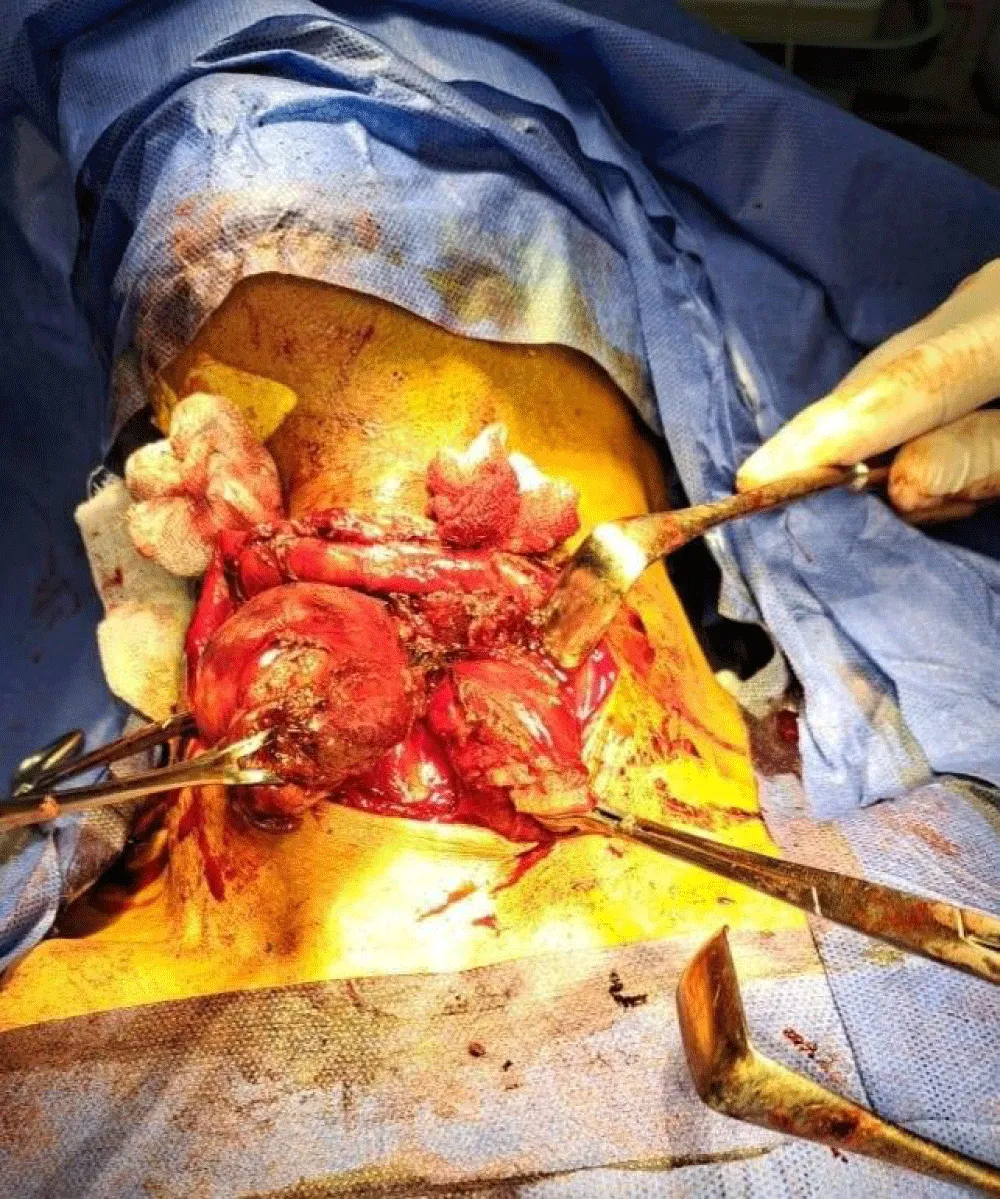
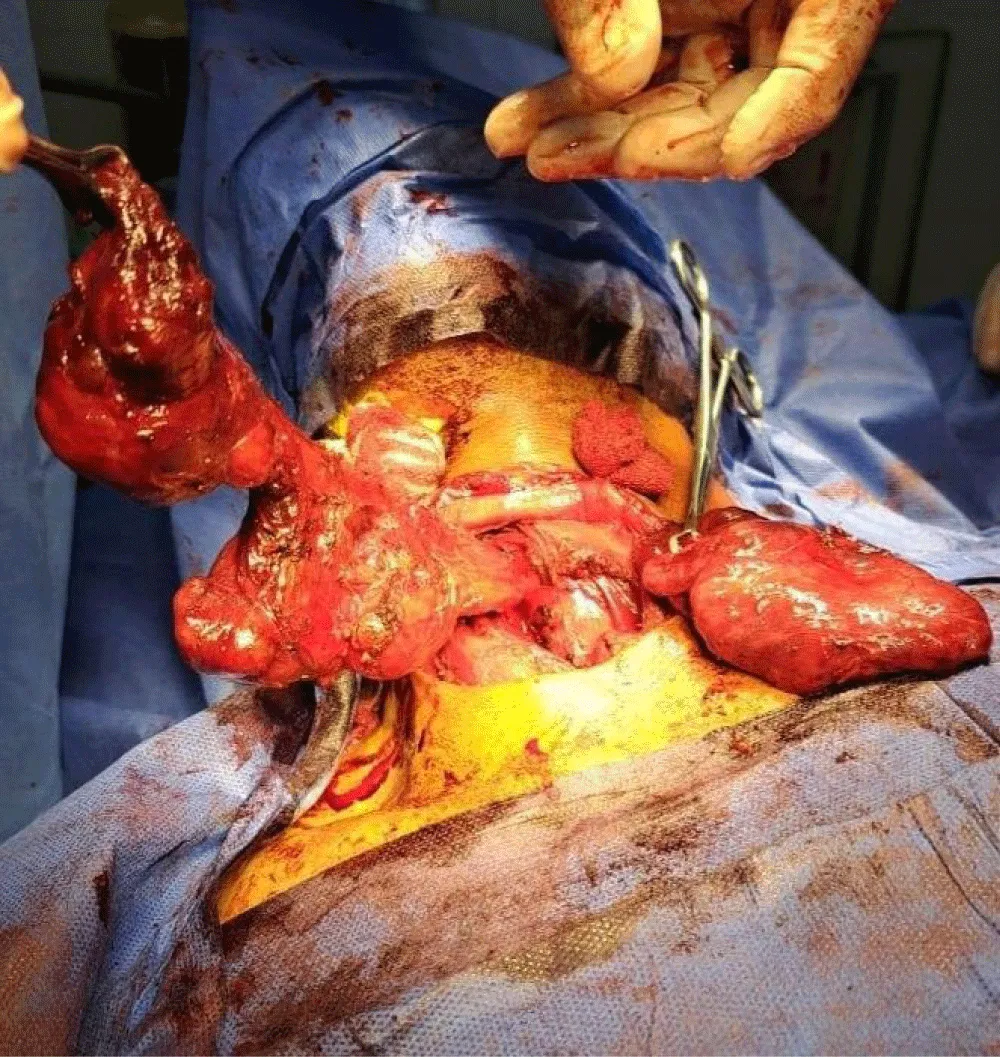
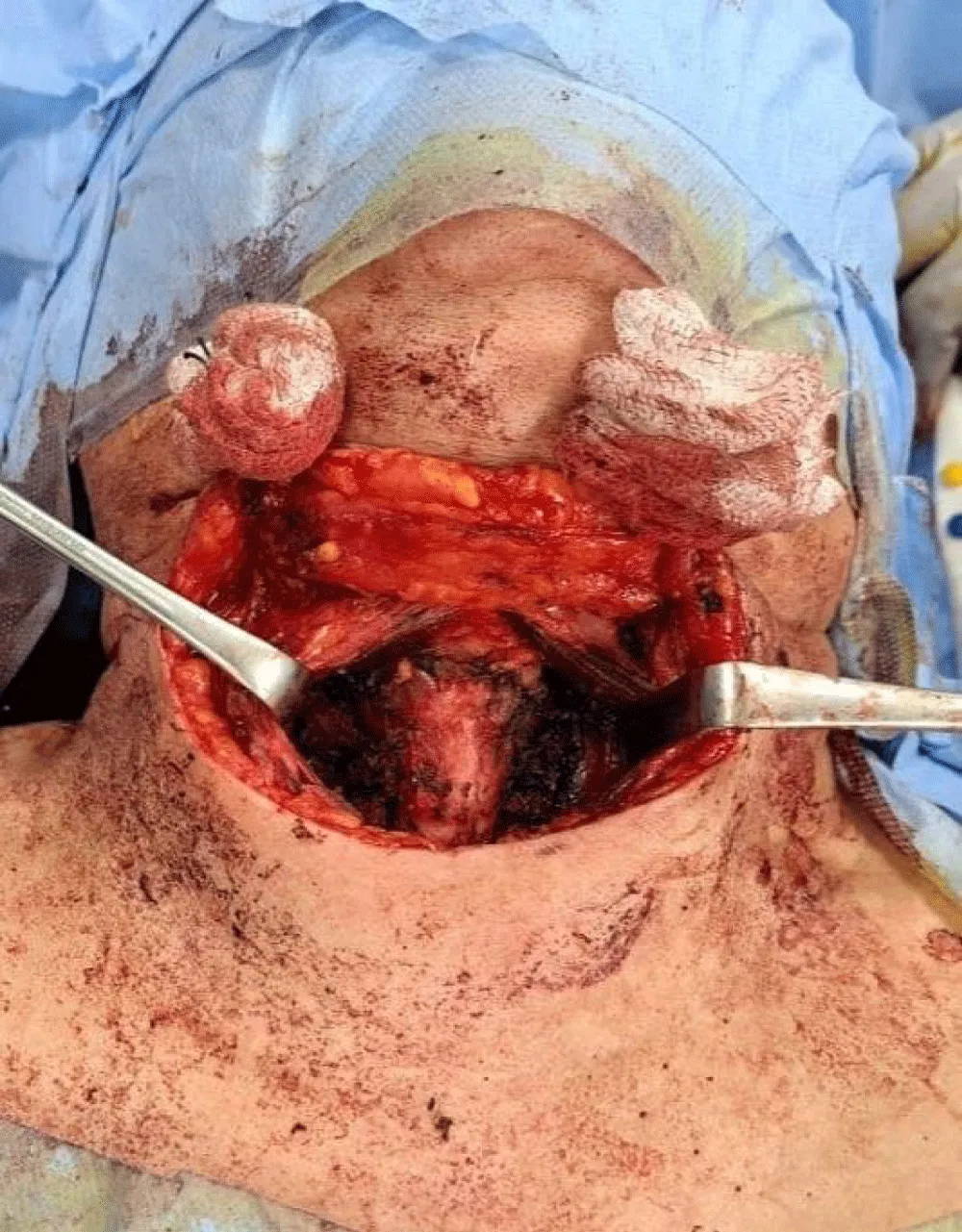
(Figure 1) Under general anesthesia with an endotracheal tube and neck extension, a skin incision is made in one of the lower neck creases. The incision is extended from the medial border of the sternomastoid to the other, and the thyroid gland is exposed by infrahyoid muscle separation in the midline. After exposure og the gland, only the use of bipolar diathermy is allowed. The gland is divided into two parts at the narrowest connection between the isthmus and one thyroid lobe; at this plane is less bloody. Dissection starts with the big part from medial to lateral directly on the gland capsule. The dissection separates the inferior thyroid vessels first, and then the superior thyroid vessels. All steps were done with the other thyroid part. After good haemostasis, the wound was closed in layers with a drain for three days. All patients were received spectrum antibiotic for five days. Thyroid hormone replacement was given to all patients directly after the operation. The follow-up period was 4 months. The clinical examination of the neck and generalized for any local and general complications at 1, 2, 4 weeks, and 3 months postoperative was done. Ultrasonography of the neck was done for all patients after 3 months. Laboratory investigations, thyroid function tests (T3, T4, TSH), and parathyroid function tests (Ca level) were done regularly (Figures 2,3).
Results
Once the gland dissection starts, only bipolar diathermy is used to avoid nerve injury, whether external laryngeal or recurrent laryngeal nerves. The dissection starts with the biggest part and deals with the inferior thyroid vessels, saving the inferior parathyroid gland. Then, go for superior thyroid vessels to dissect directly on the upper pole, saving the upper parathyroid gland. Lastly deals with the middle thyroid vein. The operative time ranged from 45 to 90 minutes (mean 60 minutes). The technique is easy to learn. No intraoperative or postoperative complications were recorded during the period of follow-up. Ultrasonography of the neck shows complete excision of the thyroid gland without any local complications. Laboratory tests were within normal levels. Five patients (25%) returned to their usual activities after one week, and 15 patients (75%) after two weeks.
Discussion
Total thyroidectomy is a common procedure, but it still has serious complications that can affect the patient's quality of life badly. The rate of complications varies and is influenced by the surgeon's experience, size of thyroid pathology, and presence of abnormal anatomy [6]. Despite advances in laparoscopic surgery, still limited in thyroid surgery. Laparoscopic thyroidectomy is difficult, limited to small pathology, and associated with the same complications of open thyroidectomy [7]. The complication rates were 15% for total thyroidectomy and 2.6% for thyroid lobectomy. The most common complications included hypoparathyroidism and hypocalcaemia (transient or permanent), and vocal cord palsy (both temporary and permanent) [8]. Hypoparathyroidism and hypocalcaemia are due to direct trauma, especially in difficult cases, or ischemia as a result of superior and inferior thyroid arteries ligation [9,10]. Recurrent laryngeal nerve injury is a serious complication after thyroidectomy, which may be temporary (4.4%) or permanent (5%), presenting as hoarseness, stridor, and chronic cough due to aspiration [11,12]. Traditional total thyroidectomy is generally associated with a higher incidence of recurrent nerve injury (RLNI) due to the extent and duration of the procedure [13]. RLNI occurs more frequently on the right side than the left side due to anatomical variations [4]. The RLNI courses within the tracheoesophageal groove (50–77%), in the paratracheal region (17–40%), in the paraoesphageal region (6%), and in the thyroid parenchyma (4%) [15]. When RLN passes through the thyroid gland, its injury will occur 100% with traditional total thyroidectomy. In our technique, after gland division, dissection starts from medial to lateral using bipolar diathermy to deal with thyroid vessels on its capsule in their branches and distal to parathyroid glands, which maintain the blood supply and its functions. This technique deals with arteries first and middle thyroid veins last, so as to prevent gland congestion and make the surgical field less bloody. Dissection by our technique is easy, and we can see all structures near and even pass through the gland parenchyma before cutting, avoiding their injuries. So, our technique for total thyroidectomy can avoid RLNI even with the presence of any anatomical variations. Divided total thyroidectomy is less invasive in skin incision and dissection around the gland in comparison to traditional total thyroidectomy. A comparative study between traditional total thyroidectomy and divided thyroidectomy on safety and efficacy is needed in the future.
Conclusion
Divided total thyroidectomy with medial-to-lateral dissection is less invasive, easy to learn, safe, and free of complications even in the presence of anatomical abnormalities.
Acknowledgment
A.E. Lasheen, Farag A, Wasefy T, Ramadan A, Foad A, Negm S, and O.A. Lasheen have no conflicts of interest or financial ties to disclose.
Ethical approval
This research was discussed and approved by the Ethical Committee of Zagazig University in January 2026.
Author contribution
*Ahmed Lasheen: His idea and all steps for manuscript preparation under his supervision. Ahmed Farag, Tamer Wasefy, Alaaelden Ramadan, Amer Foad, Said Negm, and Omar Lasheen shared in the clinical application of the idea and in writing the manuscript.
- Patel KN, Yip L, Lubitz CC, Grubbs EG, Miller BS, Shen W, et al. The American Association of Endocrine Surgeons guidelines for the definitive surgical management of thyroid disease in adults. Ann Surg. 2020;271(3):e21-e93. Available from: https://pubmed.ncbi.nlm.nih.gov/32079830/
- Arslan K, Erenoglu B, Dogru O, Ovet G, Turan E, Atay A, et al. Is the superior laryngeal nerve really safe when using a Harmonic Focus in total thyroidectomy? A prospective randomized study. Asian J Surg. 2018;41(3):222-228. Available from: https://pubmed.ncbi.nlm.nih.gov/28185774/
- Gerardi I, Verro B, Amodei R, Richiusa P, Saraniti C. Thyroidectomy and its complications: a comprehensive analysis. Biomedicines. 2025;13(2):433. Available from: https://pubmed.ncbi.nlm.nih.gov/40002845/
- Ludwig B, Ludwig M, Dziegiewicz A, Kaliszewski K. Modern surgical techniques of thyroidectomy and advances in the prevention and treatment of perioperative complications. Cancers (Basel). 2023;15(11):2931. Available from: https://pubmed.ncbi.nlm.nih.gov/37296896/
- Bothra S, Sabaretnam M, Kannujia A, Chand G, Agrawal G, Mishra SK, et al. Patient-, thyroid-, and surgeon-related factors that make thyroidectomy difficult: a cohort study. Ann Med Surg (Lond). 2020;49:14-18. Available from: https://doi.org/10.1016/j.amsu.2019.11.010
- Liang TJ, Liu SI, Mok KT, Shi HY. Association of surgeon volume and thyroidectomy outcomes: a nationwide study with systematic review and meta-analysis. Otolaryngol Head Neck Surg. 2016;155(1):65-75. Available from: https://doi.org/10.1177/0194599816634627
- Razavi CR, Russell JO. Indications and contraindications to transoral thyroidectomy. Ann Thyroid. 2017;2:12. Available from: https://doi.org/10.21037/aot.2017.10.01
- Gerardi I, Verro B, Amodei R, Richiusa P, Saraniti C. Thyroidectomy and its complications: a comprehensive analysis. Biomedicines. 2025;13(2):433. Available from: https://doi.org/10.3390/biomedicines13020433
- Mu Y, Zhao J, Zhao Q, Zhang Y, Kou J, Dionigi G, Bian X, Sun H. Factors influencing serum calcium levels and incidence of hypocalcemia after parathyroidectomy in primary hyperparathyroidism patients. Front Endocrinol (Lausanne). 2023;14:1276992. Available from: https://doi.org/10.3389/fendo.2023.1276992
- Melot C, Deniziaut G, Menegaux F, Chereau N. Incidental parathyroidectomy during total thyroidectomy and functional parathyroid preservation: a retrospective cohort study. BMC Surg. 2023;23:269. Available from: https://doi.org/10.1186/s12893-023-02176-3
- Mahmud KA, Azman M, Muhammad R, Mat Baki M. Proposal of integrated clinic pathway in the management of perioperative recurrent laryngeal nerve injury post-thyroid and parathyroid surgery. Sci Rep. 2025;15(1). Available from: https://doi.org/10.1038/s41598-025-86642-3
- George S, Suresh S. Vocal cord dysfunction: analysis of 27 cases and updated review of pathophysiology and management. Int Arch Otorhinolaryngol. 2019;23:125-130. Available from: https://doi.org/10.1055/s-0038-1661358
- Chen HC, Pei YC, Fang TJ. Risk factors for thyroid surgery-related unilateral vocal cord paralysis. Laryngoscope. 2019;129(1):275-283. Available from: https://doi.org/10.1002/lary.27336
- Alkaf H, Abuduruk S, Bayounos S, Abdel Monim SK, Alharbi J, Alessa MA, et al. Incidence of recurrent laryngeal nerve injury and associated risk factors after thyroidectomy: a retrospective study. Ann Saudi Med. 2025;45(5):296-303. Available from: https://doi.org/10.5144/0256-4947.2025.295
- Wubie AG, Biadgelign M, Fentahun N, et al. Anatomical variations of the recurrent laryngeal nerve and postoperative outcomes in thyroid surgeries conducted at a teaching hospital in Ethiopia. Sci Rep. 2025;15:44872. Available from: https://doi.org/10.1038/s41598-025-28768-y


 Save to Mendeley
Article Alerts
Subscribe to our articles alerts and stay tuned.
 This work is licensed under a Creative Commons Attribution 4.0 International License.