Journal of Surgery and Surgical Research
Central Venous Catheter Impacted into the Tricuspid Annulus over a Quarter Century
1Department Cardiothoracic Surgery, Southampton General Hospital, Southampton University Hospital Trust, United Kingdom
2Coronary Care Unit, Heart Institute, University of Pecs, Faculty of Medicine, Pecs, Hungary
Author and article information
Cite this as
Gobolos L, Miskolczi S, Hejjel L, Konyi A (2015) Central Venous Catheter Impacted into the Tricuspid Annulus over a Quarter Century. J Surg Surgical Res. 2015; 1(2): 29-29. Available from: 10.17352/2455-2968.000007
Copyright License
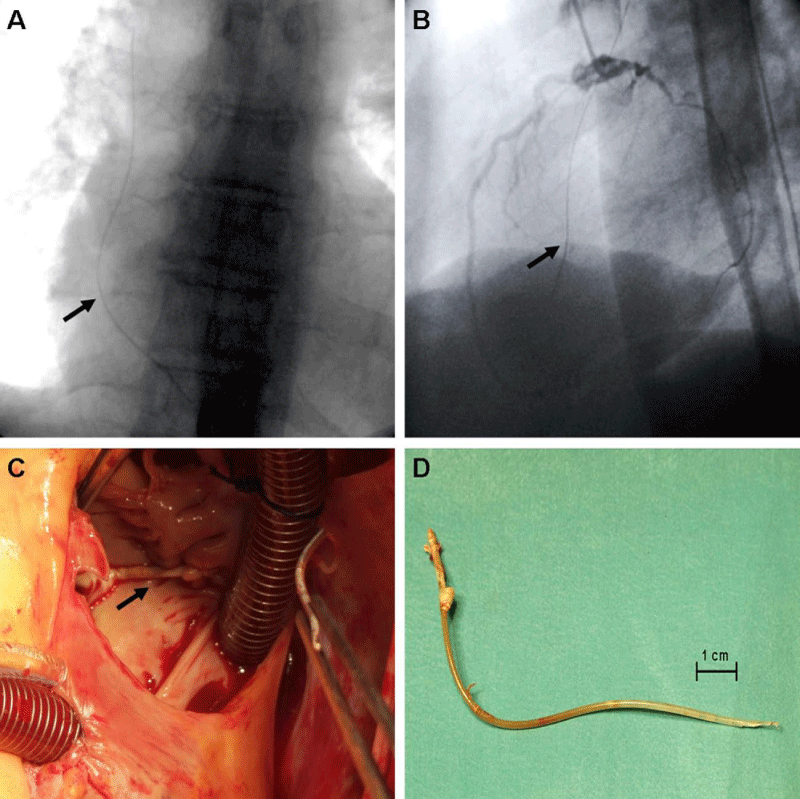
© 2015 Gobolos L, et al. This is an open-access article distributed under the terms of the Creative Commons Attribution License, which permits unrestricted use, distribution, and reproduction in any medium, provided the original author and source are credited.A 58-year-old woman was referred for elective coronary bypass graft surgery (CABG). As an incidental finding, the coronary angiogram showed a radio-opaque linear foreign body in the superior vena caval-right atrial region; additionally to a significant flow limiting multivessel coronary artery disease (Panels A, B). The nature of the foreign body was initially unclear; the patient did not give a history of penetrating chest trauma or other major diseases. Further anamnestic review revealed a suicidal attempt 25 years before, which lead to a short intensive care stay. The patient underwent a conventional triple vessel CABG. After opening the right atrium, a fractured old-fashioned central venous cannula (CVC) was found being impacted with the tip into the tricuspid annulus; the curvature accurately shaped the route through superior vena cava to the tricuspid valve (Panels C, D). Following removal of the foreign body the patient had an uneventful postoperative course.
Image Description
A 58-year-old woman was referred for elective coronary bypass graft surgery (CABG). As an incidental finding, the coronary angiogram showed a radio-opaque linear foreign body in the superior vena caval-right atrial region; additionally to a significant flow-limiting multivessel coronary artery disease (Panels A, B). The nature of the foreign body was initially unclear; the patient did not give a history of penetrating chest trauma or other major diseases. Further anamnestic review revealed a suicidal attempt 25 years before, which lead to a short intensive care stay. The patient underwent a conventional triple vessel CABG. After opening the right atrium, a fractured old-fashioned central venous cannula (CVC) was found being impacted with the tip into the tricuspid annulus; the curvature accurately shaped the route through superior vena cava to the tricuspid valve (Panels C, D). Following removal of the foreign body the patient had an uneventful postoperative course.


 Save to Mendeley
Article Alerts
Subscribe to our articles alerts and stay tuned.
 This work is licensed under a Creative Commons Attribution 4.0 International License.