Archives of Clinical Gastroenterology
Pancreatitis, Pannicultis, Polyarthritis- A Rare Triad!
Institute of Liver Disease and Transplantation, Global Hospitals, Chennai, India
Author and article information
Cite this as
Patil V, Sanglodkar U, Jain M, Varghese J, Jayanthi V (2016) Pancreatitis, Pannicultis, Polyarthritis- A Rare Triad!. Arch Clin Gastroenterol. 2016; 2(3): 63-64. Available from: 10.17352/2455-2283.000023
Copyright License
© 2016 Patil V, et al. This is an open-access article distributed under the terms of the Creative Commons Attribution License, which permits unrestricted use, distribution, and reproduction in any medium, provided the original author and source are credited.A 51 year - old – male, consuming alcohol almost 180 ml/ day for 20 years was admitted elsewhere with vomiting for 10 days, reduced urine output for 5 days and severe epigastric pain radiating to back for 3 days. In the next 3 days he developed fever alongside with pain, swelling and redness of the lower extremities, jaundice and breathlessness on exertion.
A 51 year - old – male, consuming alcohol almost 180 ml/day for 20 years was admitted elsewhere with vomiting for 10 days, reduced urine output for 5 days and severe epigastric pain radiating to back for 3 days. In the next 3 days he developed fever alongside with pain, swelling and redness of the lower extremities, jaundice and breathlessness on exertion.
On examination, he was conscious, oriented, and febrile (100 F). There was mild icterus with bilateral calf muscle tenderness. He had tachycardia (120 /min), hypotension (BP 90/56 mm Hg), tachypnea (RR-32/min) and mild hypoxia (SpO2 on room air 94 %). Examination of abdomen was normal; there was no tenderness.
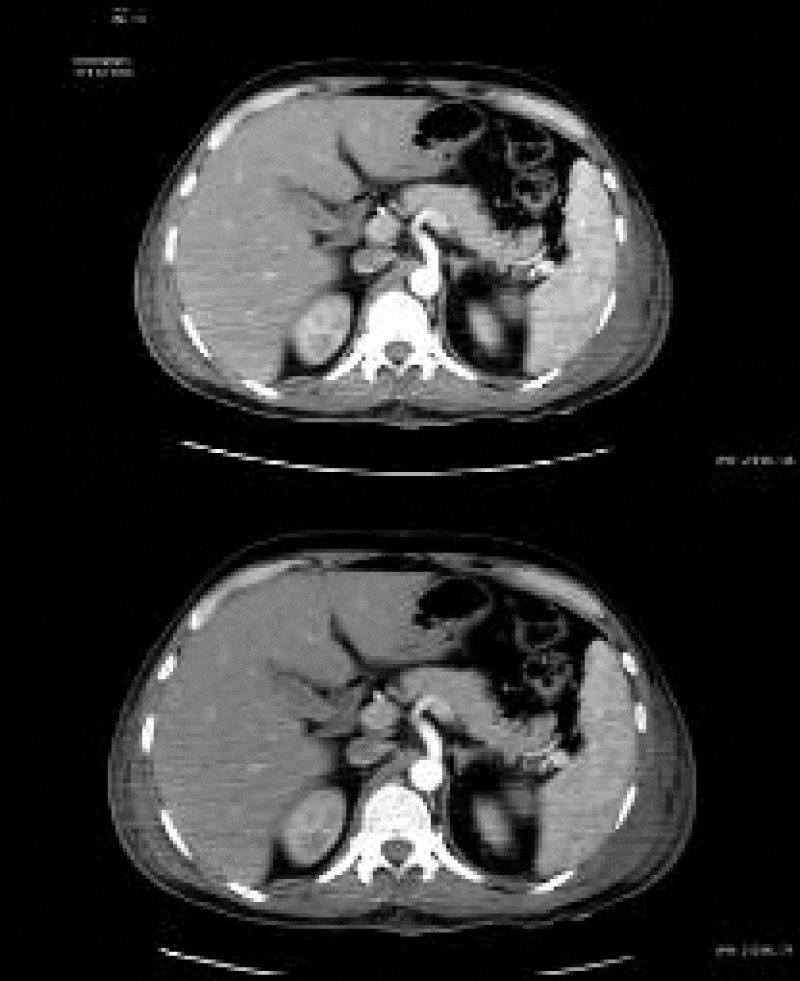
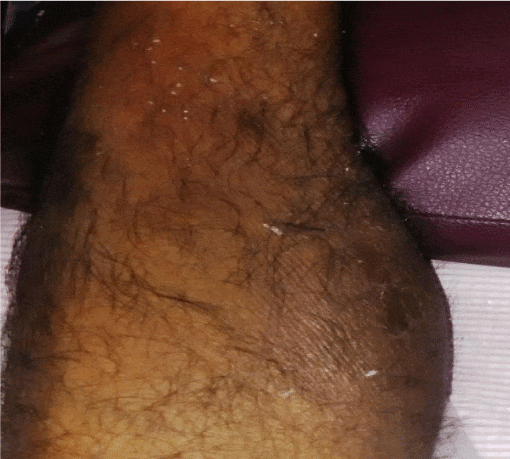
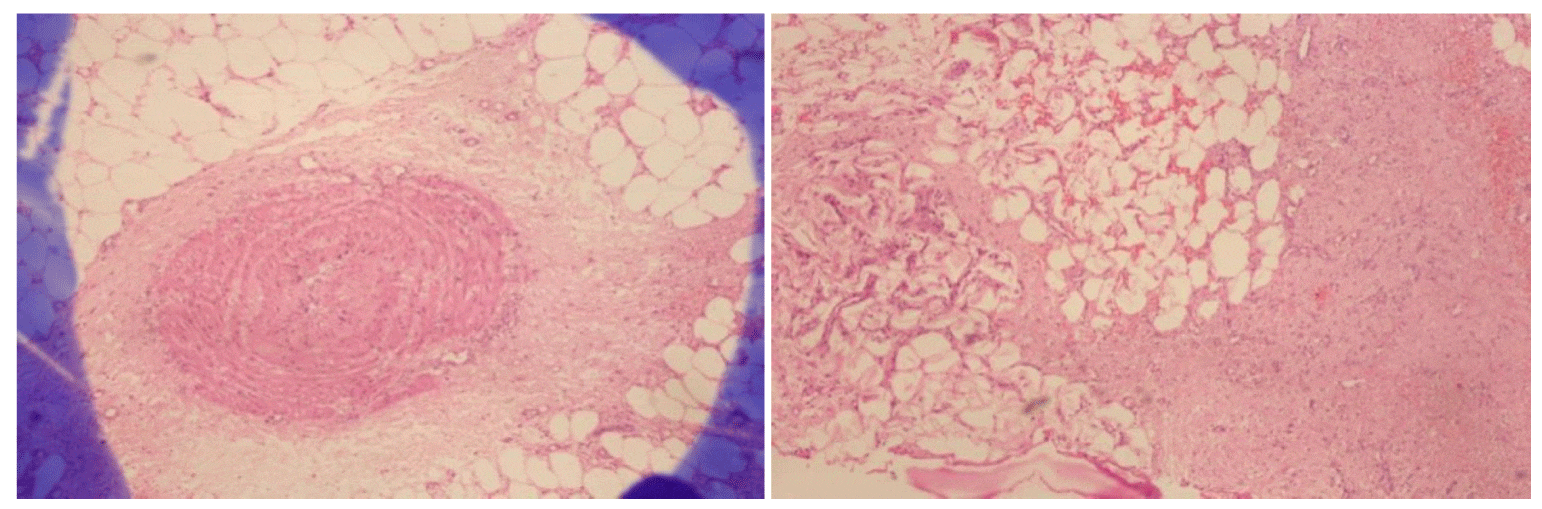
Investigations : Hemoglobin - 13.4gm/dL , Total white cell count – 28270 cells/cu. mm , Platelet count- 422000 cells/cu.mm , Blood urea – 92mg/dL, Serum Creatinine - 1.7mg/dL , Total Bilirubin - 10.9mg/dL , Direct Bilirubin - 7.19 mg/dL, Aspartate transaminase – 63 U/L , Alanine transaminase - 31 U/L, Alkaline phosphatase – 193U/L , Serum Albumin - 2.3gm/dL , INR - 1.35 , Serum Lipase – 2383 U/L , Serum amylase – 379 U/L .Chest x-ray showed bilateral minimal pleural effusion. Venous Doppler study of both lower limbs was normal. CECT abdomen on day 5 showed bulky pancreas with peripancreatic fat stranding, minimal bilateral pleural effusion and mild hepatomegaly (Figure 1). Patient was managed in the intensive care unit with intravenous fluids, parenteral meropenem 1 gram three times a day and noradrenaline infusion at the rate of 1 mg / hour. He was given oxygen at 2 liters per minute using facemask. He responded well to treatment and was started on oral feeds within 48 hours. Dermatologist opined the possibility of lipodermosclerosis in the extremities in view of the brownish discolouration and induration of the skin (Figure 2) .On biopsy, there was focal fat necrosis with eosinophilic deposits of partially hydrolyzed fat, with septal thickening, fibrosis, chronic inflammation and lobulation of subcutaneous fat (Figure 3).
On day 10, patient developed arthritis of left shoulder joint and both knee joints, restricting his mobility. Possibility of pancreatitis, panniculitis and polyarthritis syndrome was considered and he was started on a small tapering dose of prednisolone (10 mg/day). He recovered in next few days. He tolerated normal feeds, with significant symptom relief of joint and leg pain at time of discharge.
Pancreatic panniculitis is an infrequent complication characterized by subcutaneous fat necrosis that affects 0.3-3% of patients across a range of different pancreatic disorders. Skin lesions are the presenting feature in about 40% of pancreatic panniculitis and precede the abdominal symptoms by 1-7 months [1]. Clinically, they present with painful, tender, ill-defined, and erythematous to violaceous nodules that may undergo spontaneous ulceration and discharge of an oily brown, viscous material resulting from liquefactive necrosis of adipocytes. These lesions usually involve the lower extremities although they may also appear on the buttocks, trunk, and arms and scalp [2].
The exact pathogenesis of fat necrosis is not clear, but multiple factors may be involved [3]. Pancreatic lipase and amylase are known to have a pathogenic role in causing subcutaneous fat necrosis leading to panniculitis [4]. In addition to the skin, fat necrosis has been documented in peri-articular, abdominal and intramedullary adipose tissue. Arthritis can be symmetrical or asymmetrical [1] and can be oligo, mono or polyarthritis [5]. Arthralgia (or arthritis) is listed among the presenting symptoms of this triad in one- fourth of the cases [6-8]. Although metacarpophalangeals, knees and ankles are the most commonly affected sites [9,10], any joint can be involved, mimicking rheumatoid arthritis, gout and septic arthritis. Our patient did not have joinjt pain in the initial phase, however, he developed it later.
- Rongioletti F, Caputo V (2013) Pancreatic panniculitis. G Ital Dermatol Venereol 148: 419-425. Link: https://goo.gl/q2e8vj
- Narváez J , Bianchi MM , Santo P , de la Fuente D , Ríos-Rodriguez V , et al. (2010) Pancreatitis, panniculitis, and polyarthritis. Semin Arthritis Rheum 39: 417-423. Link: https://goo.gl/4rU21o
- Bem J, Bradley EL 3rd (1998) subcutaneous manifestations of severe acute pancreatitis. Pancreas 16: 551–555. Link: https://goo.gl/j0dmPt
- Borowicz J, Morrison M, Hogan D, Miller R (2010) Subcutaneous fat necrosis/panniculitis and polyarthritis associated with acinar cell carcinoma of the pancreas: A rare presentation of pancreatitis, panniculitis and polyarthritis syndrome. J Drugs Dermatol 9: 1145-1150. Link: https://goo.gl/r3ym8T
- Kotilainen P, Saario R, Mattila K, Nylamo E, Aho H (1998) Intraosseous fat necrosis simulating septic arthritis and osteomyelitis in a patient with chronic pancreatitis. Arch Orthop Trauma Surg 118: 174-175. Link: https://goo.gl/TNh7nI
- Mullin GT, Caperton EM, Crespin SR, Williams RC Jr. (1968) Arthritis and skin lesions resembling erythema nodosum in pancreatic disease. Ann Intern Med 68: 75-87. Link: https://goo.gl/uuMqkn
- Haller J, Greenway G, Resnick D, Kindynis P, Kang HS (1989) Intraosseous fat necrosis associated with acute pancreatitis. MR imaging. Radiology 173: 193-195. Link: https://goo.gl/6s4k3i
- Saag KG, Niemann TH, Warner CA, Naides SJ (1992) Subcutaneous pancreatic fat necrosis associated with acute arthritis. J Rheumatol 19: 630-632. Link: https://goo.gl/zunykG
- Potts DE, Mass FM, Iseman MD (1975) Syndrome of pancreatic disease, subcutaneous fat necrosis and polyserositis. Am J Med 58: 417-423. Link: https://goo.gl/88ycrC
- Hughes PSH, Apisarnthanarix P, Mullins JF (1975) Subcutaneous fat necrosis associated with pancreatic disease. Arch Dermatol 111: 506-510. Link: https://goo.gl/EsGrXr



 Save to Mendeley
Article Alerts
Subscribe to our articles alerts and stay tuned.
 This work is licensed under a Creative Commons Attribution 4.0 International License.