International Journal of Vascular Surgery and Medicine
Popliteal Artery Pseudoaneurysm after Prolonged Stress Position
Angiology and Vascular Surgery Department, Complejo Hospitalario Universitario de Pontevedra, Pontevedra, Spain
Author and article information
Cite this as
Moncayo KE, Dominguez JM (2015) Popliteal Artery Pseudoaneurysm after Prolonged Stress Position. Int J Vasc Surg Med. 2015; 1(1): 14-15. Available from: 10.17352/2455-5452.000006
Copyright License
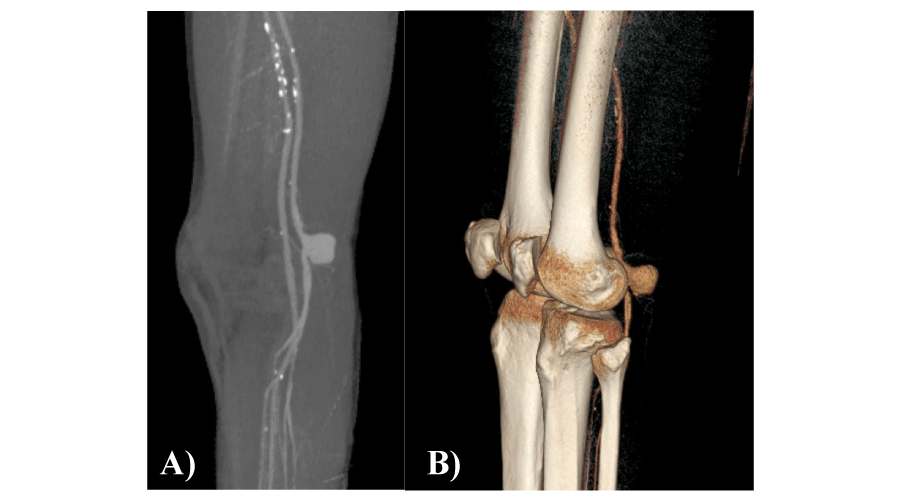
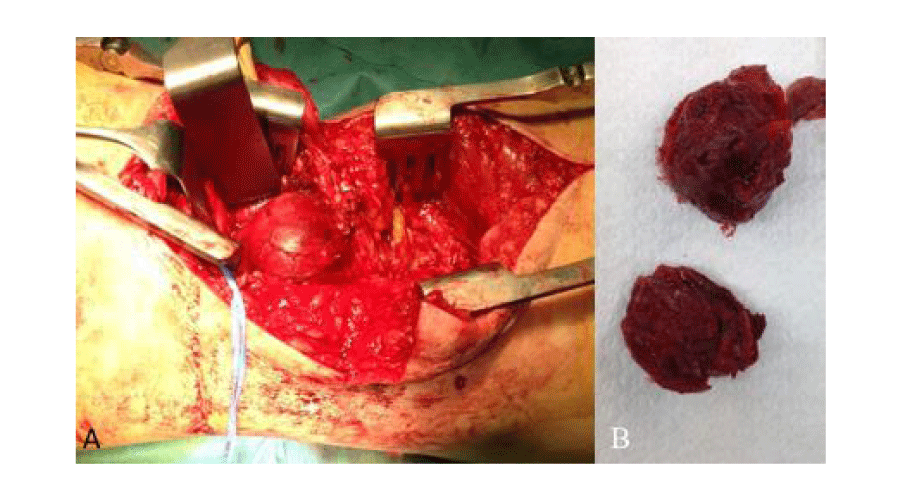
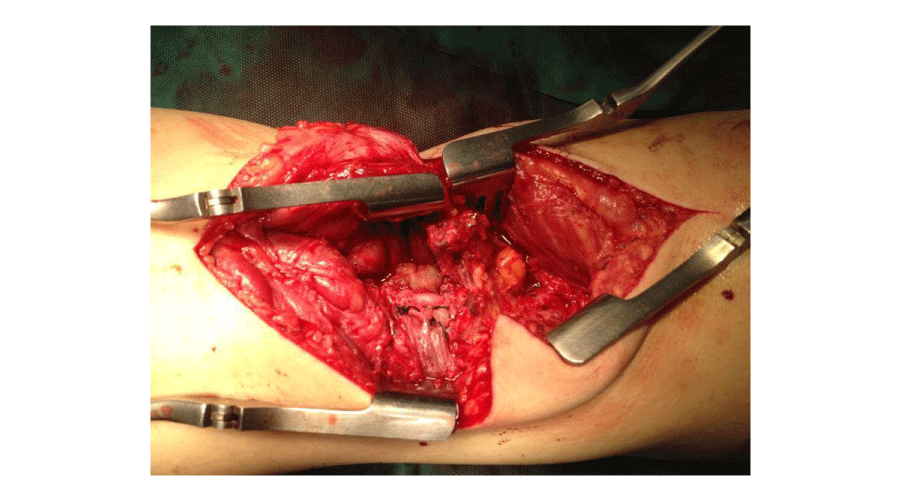
© 2015 Dar IH. This is an open-access article distributed under the terms of the Creative Commons Attribution License, which permits unrestricted use, distribution, and reproduction in any medium, provided the original author and source are credited.A 56-year-old man with past medical history of hypertension on treatment with valsartan and left fibula fracture 15 years ago, presented with a 2-month history of paresthesia on the left lower limb after working many hours on a vineyard in a squatting position. During the physical exam, the patient presented symmetric pulses on all extremities and a palpable, pulsatile mass on the left popliteal fossa. CT scan showed a patent popliteal artery with a saccular aneurysm of 37 millimeters in diameter (Figure 1), which was confirmed intraoperatively (Figure 2). A popliteal-popliteal bypass was done with the left great saphenous vein through a posterior approach (Figure 3). Blood, arterial wall and thrombus cultures were negative. Pathology confirmed diagnosis of pseudoaneurysm and no malignant cells were present. At 12-month follow-up the patient is asymptomatic with good distal pulses and no signs of bypass restenosis on ultrasound. The incidence of popliteal artery aneurysm is 0.1-1% [1], while traumatic pseudoaneurysm represents 0-3.5% of all popliteal aneurysms.
Clinical Image
A 56-year-old man with past medical history of hypertension on treatment with valsartan and left fibula fracture 15 years ago, presented with a 2-month history of paresthesia on the left lower limb after working many hours on a vineyard in a squatting position. During the physical exam, the patient presented symmetric pulses on all extremities and a palpable, pulsatile mass on the left popliteal fossa. CT scan showed a patent popliteal artery with a saccular aneurysm of 37 millimeters in diameter (Figure 1), which was confirmed intraoperatively (Figure 2). A popliteal-popliteal bypass was done with the left great saphenous vein through a posterior approach (Figure 3). Blood, arterial wall and thrombus cultures were negative. Pathology confirmed diagnosis of pseudoaneurysm and no malignant cells were present. At 12-month follow-up the patient is asymptomatic with good distal pulses and no signs of bypass restenosis on ultrasound. The incidence of popliteal artery aneurysm is 0.1-1% [1], while traumatic pseudoaneurysm represents 0-3.5% of all popliteal aneurysms. Pseudoaneurysm of this artery is an uncommon clinical entity and the most common causes are trauma, iatrogenic lesions and infections [2,3]. The complications (rupture, thromboembolism, among others.) are associated with high morbidity and mortality and has a significant risk of major amputation [4]. Treatment alternatives include ultrasound-guided thrombin injection, stenting and open repair [1]. We didn’t use thrombin because of the diameter, neck width and high risk of limb ischemia. Endovascular treatment is fast and minimally invasive, but is associated with stent fracture and lower patency. In this case, due to location and size of the pseudoaneurysm, open repair was performed.
- Sajjad J, Coveney A, Ahmed A, Fulton G (2014) an iatrogenic popliteal pseudoaneurysm masked under compartment syndrome of leg. J Surg Case Rep 1.



 Save to Mendeley
Article Alerts
Subscribe to our articles alerts and stay tuned.
 This work is licensed under a Creative Commons Attribution 4.0 International License.